
The practical takeaway
Start with shade and how you use your yard, then choose plants, irrigation, and surfaces together. A desert landscape still needs watering and maintenance, especially while plants establish.
A good Las Vegas desert landscape does more than replace lawn with gravel. It gives you a comfortable place to sit, a clear route to the front door, and planting areas that suit the Mojave climate. The strongest design starts with the way your household uses the yard, then works backward to shade, surfaces, and watering.
This guide helps you prepare for a landscape design and installation project. It is a planning starting point: soil, sun exposure, drainage, and existing trees can change what will work on your property.
1. Plan the layout around shade and daily use
Before choosing a rock color or plant list, walk the yard in the morning and late afternoon. Note where you actually want to spend time and which areas receive reflected heat from walls or pavement. A seating area that looks attractive from indoors may be uncomfortable when you use it after work.
- Keep the main walking route direct, with enough space to carry groceries or move yard equipment.
- Place a sitting area where existing shade can help, or plan shade as part of the project.
- Leave room for trees and shrubs at their mature size rather than filling every open spot on installation day.
- Preserve access to irrigation valves, utility equipment, gates, and drainage routes.
SNWA’s landscape design guide emphasizes plant placement based on exposure, mature size, and water needs. Use that approach to organize planting groups rather than treating every part of the yard alike.
2. Choose plants for the location, not just the label
“Drought tolerant” does not tell you whether a plant fits a narrow walkway, a shaded courtyard, or a west-facing wall. Compare mature spread, light requirements, seasonal appearance, and maintenance before buying. A smaller plant in the correct position is often a better starting point than a large specimen that will need constant cutting back.
Use the plant resources linked from SNWA’s Water Smart Landscapes page to build a shortlist. When discussing trees, ask how their future canopy and roots will relate to walls, pavement, and utilities. For plants with spines or sharp leaves, keep the mature plant clear of the route people and pets use.
3. Design the irrigation with the planting plan
Removing grass without redesigning the watering system can leave sprinklers spraying empty rock beds or new plants sharing an unsuitable schedule. Mark the existing zones on your plan and decide which lines need to be removed, capped, repaired, or converted.
SNWA’s residential conversion requirements call for efficient drip irrigation and a permeable finished area. If you are applying for the rebate, confirm the current requirements before work begins. Our irrigation services cover sprinkler and drip design, installation, and repairs.
Ask for a watering plan for newly planted material and a separate plan for established plants. Do not use a lawn schedule as a default for every tree and shrub. Keep an accessible record of the controller settings and where valves are located so future adjustments are straightforward.
4. Balance rock, planting beds, and artificial turf
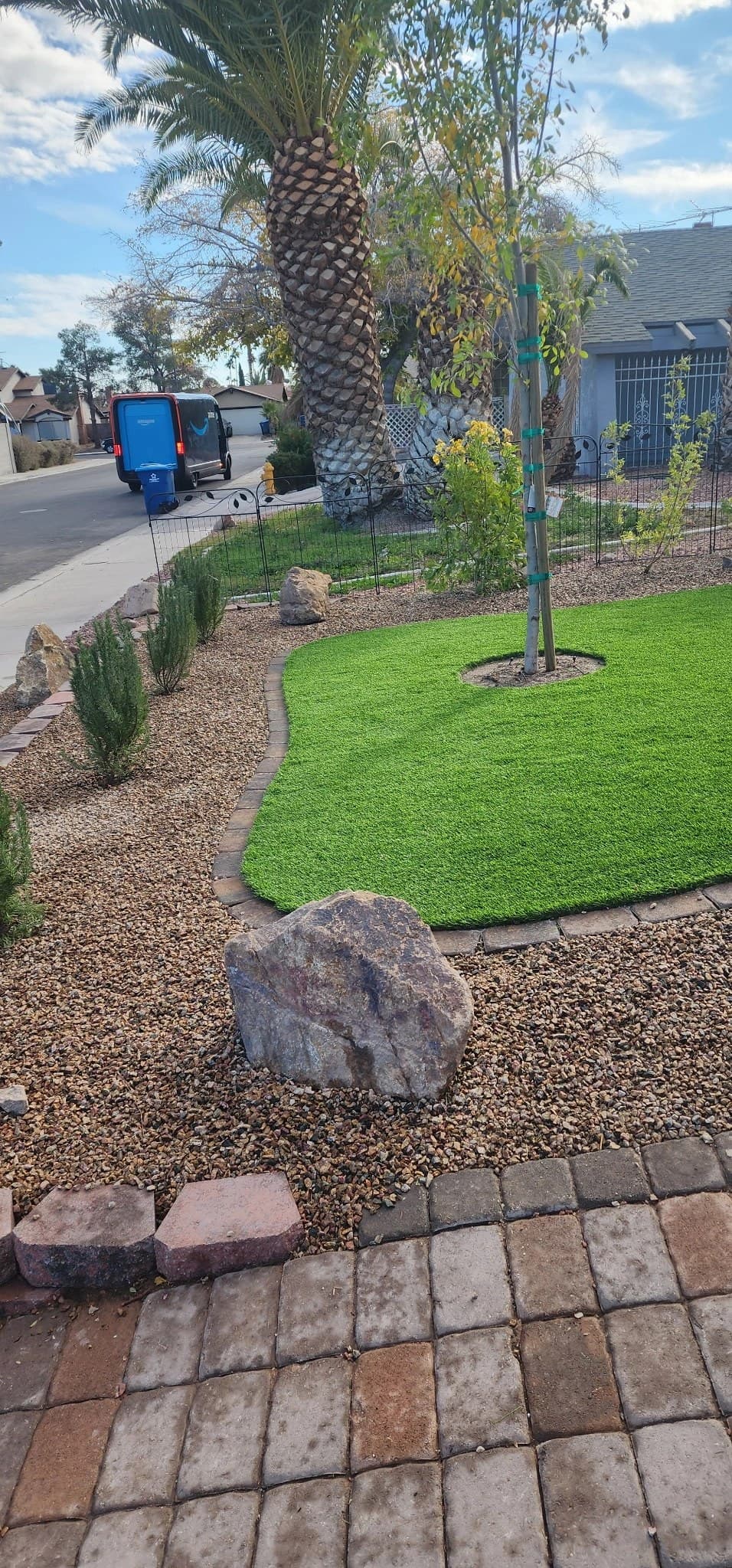
Choose materials by purpose. A defined gravel bed can frame a planting area; a stable paved route can connect the gate to a patio; a small green area may suit a space used for play. Look at full-size material samples beside your home rather than selecting everything from a phone photo.
Artificial turf removes the need to mow that area, but it is not maintenance-free. Plan for debris removal, pet cleanup, drainage, and eventual replacement. Ask the supplier about surface temperature in direct sun and suitability for the way children or pets will use it. Green color alone does not provide shade.
If you are considering a patio as part of the redesign, our Las Vegas paver patio guide explains the grading, installation, and maintenance questions to ask before choosing a surface.
5. Prepare a clear project brief
- Bring photos of the whole yard and close-ups of problem areas, along with rough dimensions.
- List what stays: trees, existing patios, irrigation equipment, and access routes.
- Identify your priorities: shade, less lawn, easier upkeep, seating, privacy, or improved drainage.
- Ask the quote to separate removal, grading, irrigation, planting, surface materials, and cleanup.
- Discuss HOA design review and any permit requirements before agreeing on a start date.
For an SNWA rebate, do not remove the lawn until the required pre-conversion visit and approval are complete. Check the current enrollment requirements before scheduling removal; a contractor estimate does not establish eligibility.
Common desert landscaping questions
Does a desert landscape need watering?
Yes. Plant water needs vary, and newly installed plants need an establishment plan. Design irrigation for the plants and your site instead of assuming a low-water garden can be left dry immediately after installation.
Can I keep a small lawn?
Discuss the area you actually use and the rules that apply to your property. If retaining existing grass is appropriate, keep the design and watering practical. Our summer lawn care guide explains how to assess the remaining lawn and its sprinklers.
What is the first step for my yard?
Create a short list of needs, take photos, and arrange a site assessment. Explore our Las Vegas service area and project gallery, or contact Transformers Landscaping to discuss the layout and scope.
Sources and further reading
Technical and local guidance consulted for this update on September 30, 2026. Check the linked authority for current requirements.
Talk through your project
Call to discuss your yard, maintenance needs, or a free project estimate.
Related guides for your yard
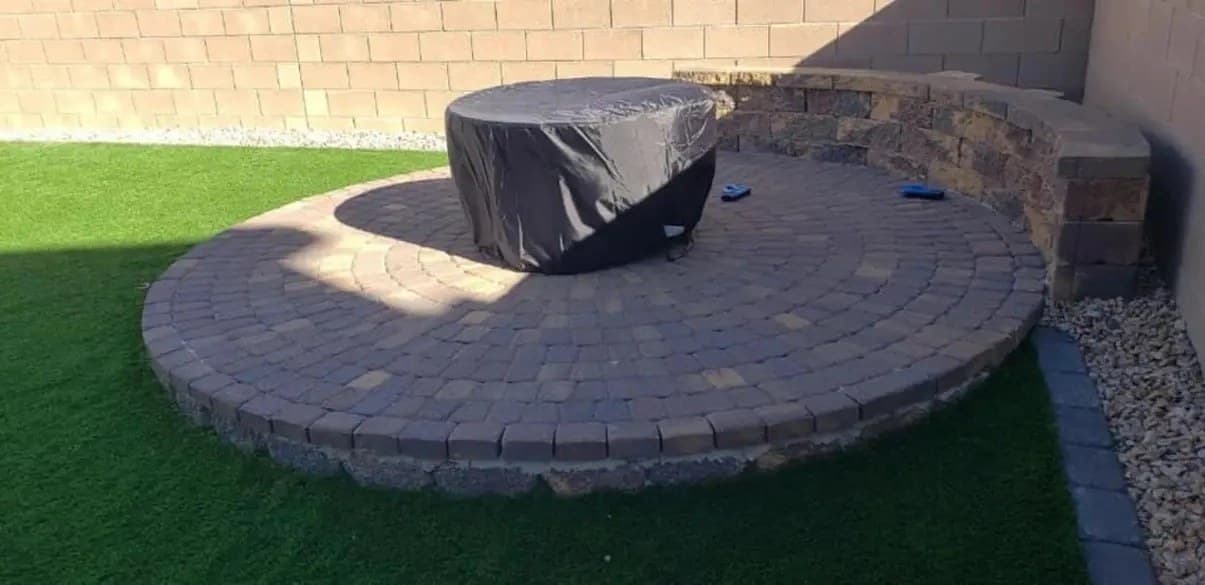
Paver Patios in Las Vegas: Benefits and Planning
Compare pavers with concrete and plan a Las Vegas patio around drainage, shade, access, installation quality, and future maintenance.
Read the guide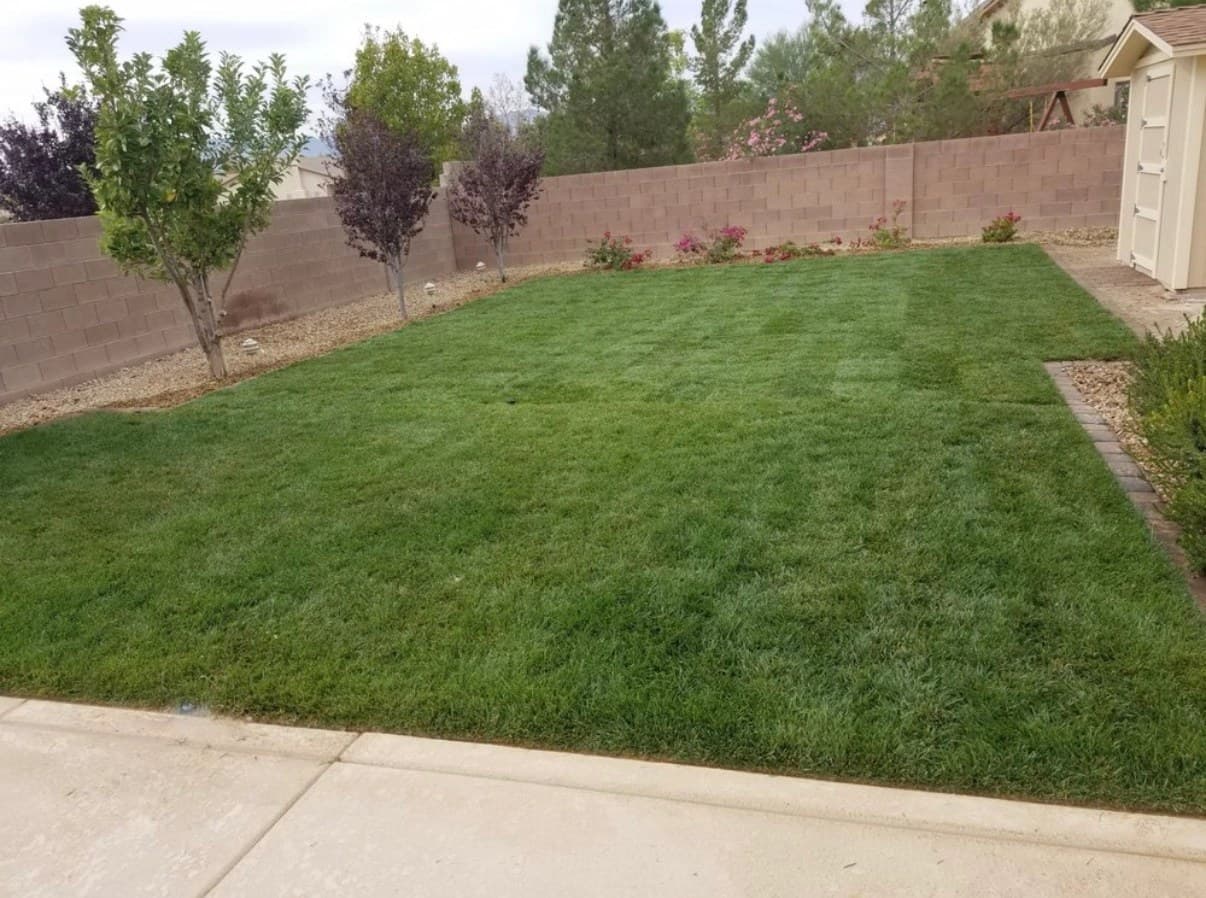
Summer Lawn Care Tips for Las Vegas
Check your watering schedule, sprinkler coverage, mowing habits, and dry spots before making big changes to a heat-stressed Las Vegas lawn.
Read the guide