
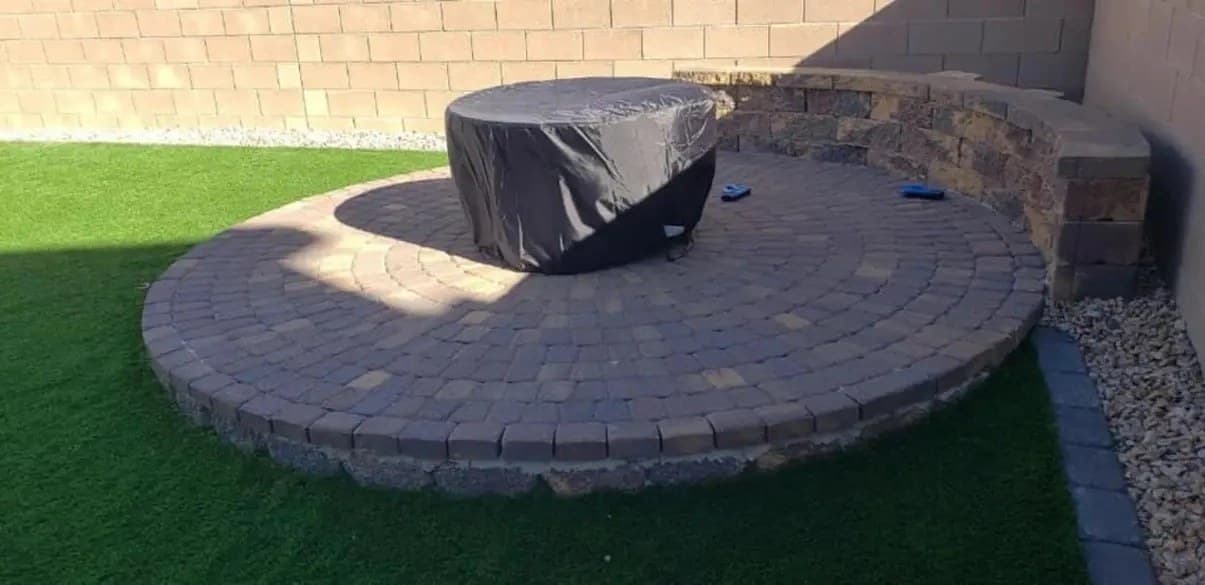
The practical takeaway
Pavers can offer design flexibility and localized repairs, but the base, drainage, and edge restraints matter as much as the surface. Choose a patio for how you will use it, not a promised resale return.
A paver patio can turn an awkward patch of yard into a place for meals, conversation, or a clear connection between the house and garden. For Las Vegas homeowners, the main questions are practical: will it be comfortable to use, where will water go, and what work is needed beneath the finished surface?
Pavers are one option within our hardscaping services. They are not automatically better than every concrete installation. This guide explains where they can make sense and what to compare before committing to a design.
What makes pavers worth considering?
Individual paving units let you shape curves, borders, and patterns without relying on one continuous slab. They can help connect a patio to a walkway or give a seating area a distinct edge. If a unit is damaged, it may be possible to replace it locally, although matching an older color or product can be difficult.
That flexibility is useful when you expect to adjust nearby planting or need future access below part of the surface. It does not make the patio immune to settlement, staining, weeds, or drainage problems. Those are installation and upkeep questions, not just product-selection questions.
Pavers versus poured concrete: compare the tradeoffs
- Appearance: pavers offer patterns and borders; concrete can provide a simpler continuous surface. Compare actual samples and finished projects.
- Repairs: individual pavers may be lifted or replaced; slab repairs can leave a visible patch. Either system can need repairs.
- Maintenance: pavers have joints to inspect; concrete has joints and cracks to monitor. Ask what routine care each proposal requires.
- Access: discuss transitions, surface texture, furniture stability, and mobility needs before choosing either material.
- Budget: compare the complete installed scope, including removal and drainage, rather than comparing only material prices.
A concrete slab may suit a straightforward project. A paver system may suit a custom layout or a preference for replaceable units. Neither surface guarantees a particular increase in property value, and resale should not replace your own goals for the space.
The work beneath the patio matters
Ask the installer to explain the excavation, prepared base, bedding layer, and joint material proposed for your site. The CMHA application guide describes the importance of site-appropriate pavement design. A pedestrian sitting area and a surface carrying vehicles do not necessarily need the same construction.
Drainage should be part of the layout from the beginning. Discuss where runoff from the patio, roof, and nearby planting will travel. An attractive surface can still perform poorly if water collects at the house, a doorway, or a low point. Do not assume ordinary paver joints make the entire system permeable; a permeable pavement is a specific design.
Edge restraints also deserve a place in the written scope. CMHA’s edge-restraint guidance explains how restraints keep paving units from spreading. Ask which restraint will be used and how it will be supported rather than judging the installation only by the finished pattern.
Plan for shade, furniture, and access
Measure your table, chairs, and any grill, then allow room to pull chairs out and walk past them. Mark the outline on the ground before finalizing the patio size. Check the route from the back door to the gate and leave access to utility and irrigation equipment.
View the proposed location at the time of day you expect to use it. Ask to compare surface samples in sun and shade. If a shade structure, fire feature, or outdoor kitchen is part of the plan, clarify approvals, utilities, and who is responsible for each part of the work before construction.
For the planting around the patio, use our desert landscaping guide. Combining the landscape design and hardscape plans helps keep mature plants, irrigation lines, and walking routes from competing for the same space.
What should a paver patio estimate include?
There is no useful single price for every Las Vegas yard. Size, access for removal and delivery, existing surfaces, material selection, pattern complexity, site preparation, and drainage all affect the scope. Compare written estimates for the same work rather than accepting a low square-foot figure with unclear exclusions.
- Dimensions, material name, color, pattern, borders, and transitions to existing surfaces.
- Demolition, haul-away, excavation, and the proposed base preparation.
- Drainage plan, edge restraints, bedding and joint materials, and utility coordination.
- Responsibility for approvals, cleanup, irrigation adjustments, and restoring disturbed areas.
- Payment milestones, expected schedule, written warranty terms, and maintenance instructions.
Plan for maintenance after installation
Sweep debris, check for loose or uneven units, and inspect joints after heavy runoff. Choose cleaning products and methods compatible with the paver and joint system. CMHA’s patio maintenance guide covers seasonal care; manufacturer instructions should guide any pressure washing or sealing.
Keep a record of the paver product and retain spare units if practical. If a section settles repeatedly, investigate the underlying cause instead of simply resetting the same units. Our irrigation repair services can help assess nearby leaks or sprinkler problems that need attention alongside hardscape repairs.
Common paver patio questions
Do pavers stay cool in Las Vegas?
Do not assume they do. Material, color, shade, and exposure affect comfort. Ask to see samples outdoors and plan shade where people will sit or walk, especially if barefoot use is important.
Do all paver patios need sealing?
No single sealing schedule fits every product. Ask about your selected material, the joint system, the desired finish, and the manufacturer’s recommendations before adding sealing to the maintenance plan.
How do I start planning a patio?
Collect dimensions and examples of layouts you like, then arrange a site visit. Browse our project gallery and contact Transformers Landscaping to discuss a patio scope for your yard.
Sources and further reading
Technical and local guidance consulted for this update on September 30, 2026. Check the linked authority for current requirements.
Talk through your project
Call to discuss your yard, maintenance needs, or a free project estimate.
Related guides for your yard
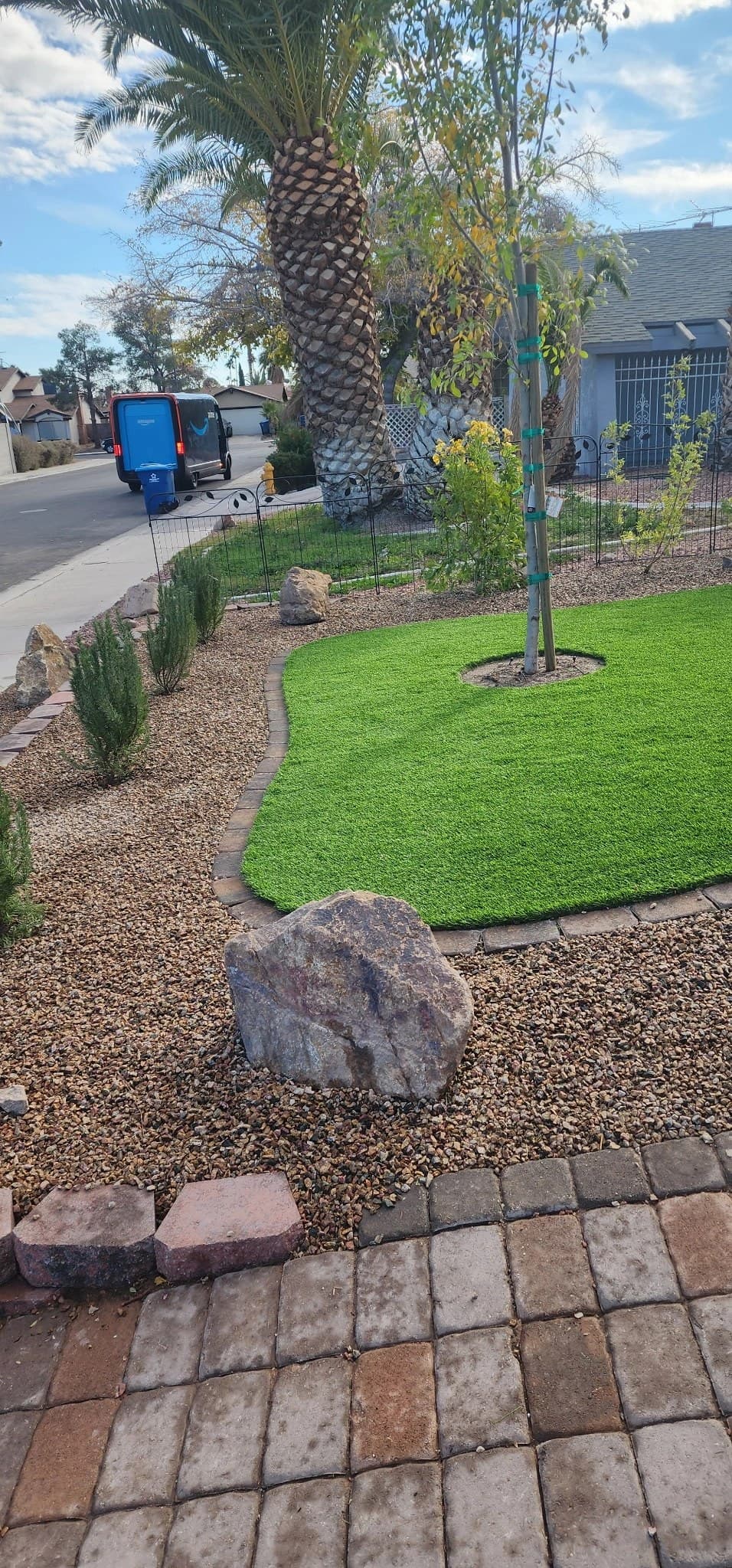
Desert Landscaping Ideas for Las Vegas Yards
Plan a water-smart Las Vegas yard with useful shade, well-placed plants, efficient irrigation, and materials that fit how you use the space.
Read the guide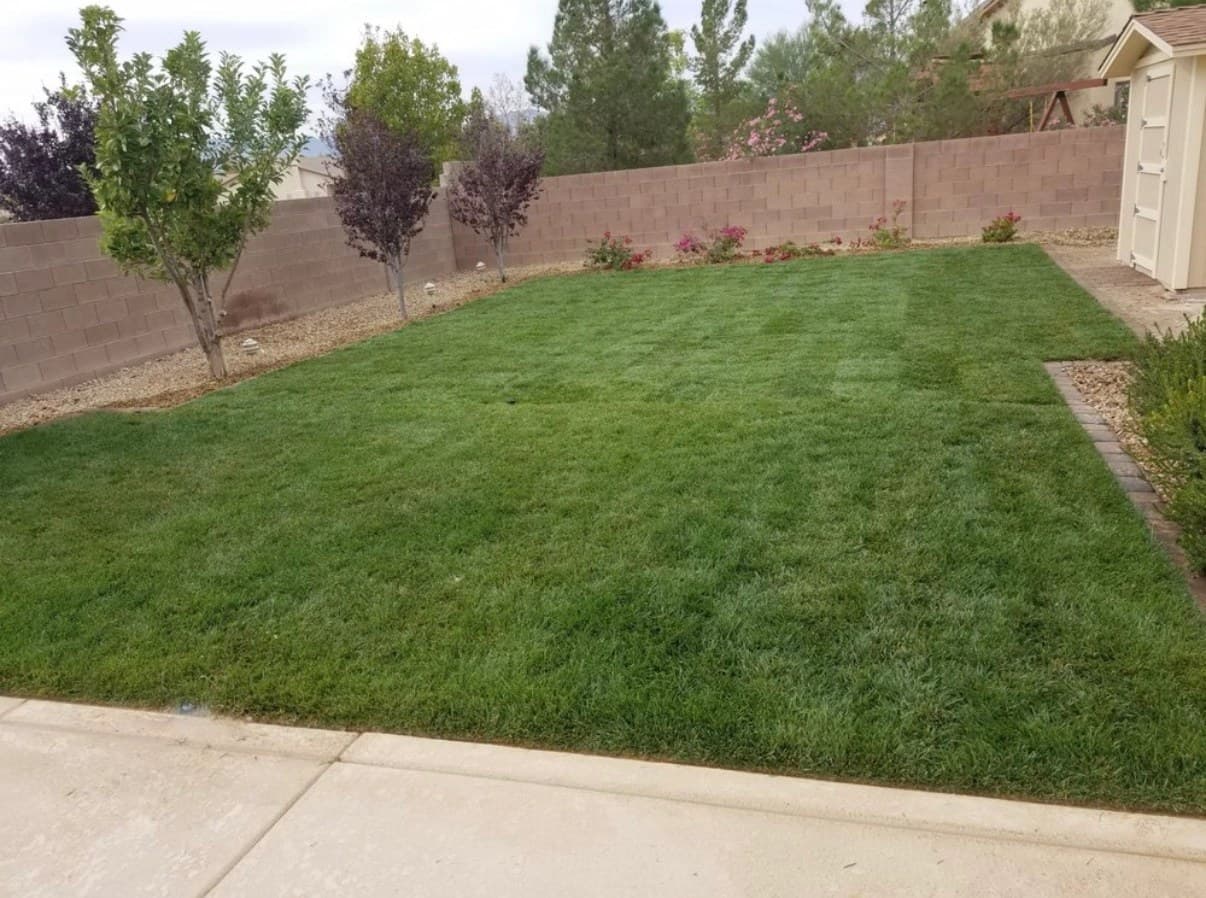
Summer Lawn Care Tips for Las Vegas
Check your watering schedule, sprinkler coverage, mowing habits, and dry spots before making big changes to a heat-stressed Las Vegas lawn.
Read the guide